A WAY FORWARD
It’s early afternoon, and University of La Verne President Risa Dickson, dressed in business casual and sensibly chic flats, has returned to her Founder’s Hall office from an Academic Affairs meeting. Her goal in these meetings and others like it is to share information frequently and transparently. “I tend to be very collaborative. I delegate […]
January 21, 2026
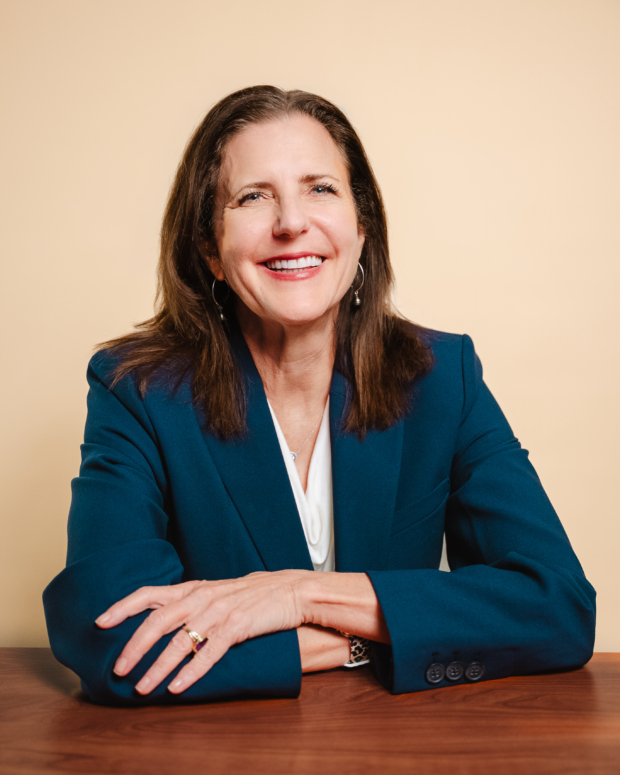
It’s early afternoon, and University of La Verne President Risa Dickson, dressed in business casual and sensibly chic flats, has returned to her Founder’s Hall office from an Academic Affairs meeting. Her goal in these meetings and others like it is to share information frequently and transparently.
“I tend to be very collaborative. I delegate appropriately. I will explain what I’m doing and why,” says Dickson, settled now in her office. “I’d like to think that I’ve generated a level of trust with everyone because when they approach me, they’re going to get consistency.”
This trust is essential as Dickson, in unison with all ULV constituents, navigates a challenging time for colleges and universities.
“Right now, higher education is in a very hard pivot,” she says. “What I’m here to do is create stability and provide a way forward into the future so that the university is relevant to students and to the communities that they’ll live and work in.”
Leading in Uncertain Times
Dickson is well-suited for this moment. A communication theorist who specializes in interpersonal and organizational communication, she arrived at ULV as Interim Provost, a position she held for nearly eight months. She was appointed president in August 2024, following Acting President Mark Hicks and the university’s 19th President, Pardis Mahdavi, who resigned in June 2024.
Prior to ULV, Dickson held interim positions at the University of Toledo (Provost) and at Palo Alto University (Interim Vice President). Her career in higher education also includes serving as Vice President for Academic Planning and Policy at the University of Hawaii (seven and a half years) and as Associate Dean and Communication Studies Department Chair at Cal State San Bernardino (24 years).
She says her experiences have made one thing clear: most institutions’ problems are not unique.
“Having worked in so many different organizations, from small private institutions to big public ones, I’ve learned that they all run quite similarly,” Dickson says. “I’ve learned what hasn’t worked and what has.”
Nearly all schools have been impacted by the “enrollment cliff”: fewer college-age students. Colleges and universities collectively experienced a 15% decline in enrollment between 2010 and 2021, according to the National Center for Education Statistics. ULV had an 8% drop in total headcount1 in fall 2024 compared to the prior year, showing decreases in both undergraduate and graduate programs by 9% and 8%, respectively. The university’s enrollment stood at 8,000 undergraduate students for much of the 2010s before declining near the end of the decade.
Add to this the influence of technology. “The way our students’ brains work and how they think and learn has changed,” she says. “Students are entering a world where jobs are being created and becoming obsolete unlike any other time in recorded history. Today’s students really will have to create the future.
“Artificial intelligence is going to be pervasive. It’s not just about how students use it in the classroom. Our students need to be able to understand how to really create, harness and use AI, and we are just learning what skills are needed for that,” says Dickson. “Companies like Amazon—which starts meetings with a six-page memo—are looking for excellent writers.”
Educating Students for the Future
The belief that higher education builds—and must continue building—America guided discussions among more than 100 U.S. college and university presidents and policy makers at the February 2025 ACE on the Hill conference in Washington, D.C. Organized by the American Council on Education—Dickson is a former ACE Fellow and ACE Council of Fellows Professional Development Committee member—the meeting included panel discussions with congressional staff and remarks from members of Congress, which, Dickson says, “helped me understand what I should be focused on.” Prominent on her mind is the House reconciliation bill that includes reimbursements to the federal government for unpaid interest and principal on certain federal student loans (“risk sharing”) and student financial need assessments based on the program of study.
“Part of this is just watching how things play out—not getting upset or scared about it,” she says. “There are long-term issues looming in Washington around educational policy that we really need to focus on in terms of collaborating and advocating with other institutions so that we can elevate these issues to the national level. I try to strategize and focus on the opportunities.”
As far as ULV is concerned, she says, opportunities abound.
Opportunities Above Obstacles
“I think ULV is well-positioned because it’s very deeply rooted in the region,” Dickson says. “There are over 80,000 alumni worldwide. It’s financially stable, and it’s unlike other institutions in the area.”
Newly revised 2025 Carnegie Classifications designate ULV as an Opportunity University that excels in both providing access to education and supporting students in achieving competitive earnings post-graduation. U.S. News and World Report ranked ULV as the second-highest California university for the online bachelor’s in business. A 2025 Military Friendly® School, ULV offers award-winning programs, including the EdD in educational leadership (ACHE Distinguished Program Award) and the master’s in child development degree program (designated No. 1 by intelligent.com).
Along with these points of pride, Dickson notes the university’s talented faculty—“the heart of the institution”—and students who do remarkably well, with many alumni forging lucrative careers that have allowed them to give back, some donating millions of dollars to the university.
“ULV really provides social mobility,” Dickson says. “Wherever you start, you are going to end up in a better place, which is what education should do for you.”
Community Connections
In February, ULV and El Rancho Unified School District announced a new partnership to expand college access and career advancement opportunities for district students and employees. Students meeting ULV admission criteria will receive guaranteed acceptance and financial assistance. The agreement also includes waived application fees, dedicated counseling, and college readiness programs to help students meet admission requirements. At the event celebration, Dickson noted that this initiative removes barriers and “creates new opportunities for college success.”
The university’s relationship with the city of La Verne is another important community connection. Dickson and City Manager Ken Domer meet regularly.
“We’re interested in building the city and the university together, because we rely on each other,” Dickson says. “We’re talking about some really cool opportunities because the Foothill A Line recently opened.”
ULV’s Enrollment Management building, which sits adjacent to the 12.3-mile extension of the Metro A Line running from Glendora and eventually to Montclair, has potential for some city-university spaces.
Dickson believes such collaborations, along with ULV’s distinctive education, will continue to make the college a sound choice for prospective students in Southern California and beyond.
“I believe that student success is community success. Educated communities are healthier communities,” she says. “The livelihood of our communities relies on an educated citizenry.”
A Clear Strategy
This sentiment is reflected in ULV’s 2025 Strategic Vision, which directs university leaders to deliver “flexible, personalized, career-focused education within an inclusive learning environment.”
“Our strategic direction helps us all understand what we’re doing and why,” she says.
Dickson oversees all aspects of university operations in her deliberate, collaborative style, guiding the institution through a time of transition.
“If you have strong processes and policies, it doesn’t matter who steps into the position of president, because the organization is running itself,” she says. “I’m here to ensure that things are done the way that they need to be done. So, my focus is on policies, processes, strong structure and making sure that the right people are in the right jobs.
“I believe we’re creating the future of higher ed,” says Dickson of the institution’s stakeholders. “The University of La Verne is in such a uniquely special place to do this based on who we are, our history, and where we are in terms of the work that needs to be done. It will be a lot of work over the next couple of years, but we’re making huge strides and building forward. It’s exciting.”