Her Space
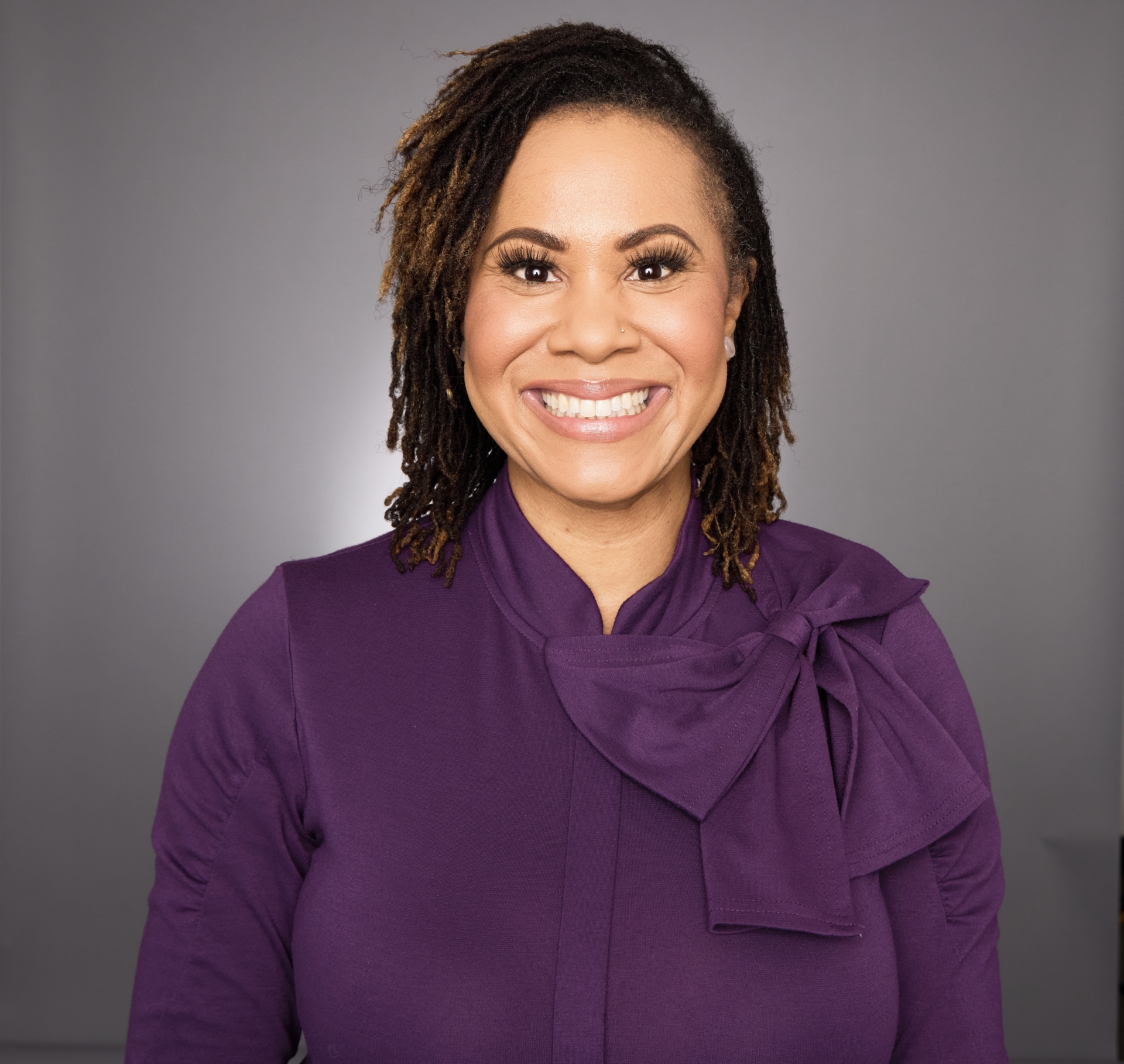
When Michaelyn Thomas EdD ’17 was four years old, she looked toward the stars, saying to herself, “I want to work in outer space when I grow up.” Everyone has a story, and Dr. Thomas’s is quite unique. Through resilience, professional experience, grit, and doctoral research at the University of La Verne, she has had […]
January 21, 2026
When Michaelyn Thomas EdD ’17 was four years old, she looked toward the stars, saying to herself, “I want to work in outer space when I grow up.”
Everyone has a story, and Dr. Thomas’s is quite unique. Through resilience, professional experience, grit, and doctoral research at the University of La Verne, she has had the opportunity to reach the highest levels of the space industry. Fortune 100 companies, government organizations, including international, and wealthy investors have relied heavily on her mathematical modeling abilities for cost, price, and competitive analyses as well as her systems engineering skillsets for technical assessments on complex space programs.
Within the first 10 years of her nearly two-decade career, Dr. Thomas went from an entry-level employee to reporting directly to the CEO at a Sir Richard Branson space company, Virgin Orbit. Today, she is a program manager and a system-of-systems engineer for a highly complex space portfolio at The Johns Hopkins University Applied Physics Laboratory, and she also teaches engineering graduate students at the Whiting School of Engineering at The Johns Hopkins University.
“It’s critically important to learn, embrace, and implement your life’s purpose. It’s okay to evolve your purpose as you navigate life and learning, and it’s imperative to allow your passion to guide it.”
Scholastically, Dr. Thomas is a published author and belongs to Tau Beta Pi, the engineering honor society. She holds a doctorate degree in organizational leadership from University of La Verne; a master of science degree in space systems engineering from The Johns Hopkins University; a master of business administration degree from University of Redlands; and a bachelor of arts degree in political science, public law with a minor degree in Russian language from California State University, Long Beach. Dr. Thomas admits that her degree path is very unconventional, yet it was intentional.
Despite these accolades, Dr. Thomas still struggled with imposter syndrome. She explains that imposter syndrome disproportionately plagues many high-achieving, underrepresented groups more than most will ever understand or realize, because underrepresented groups are often disproportionately represented in the spaces they are working or leading. This experience can be categorized as an adverse psychological response to one’s talent, intellect, skillsets, and accomplishments. It causes the individual to doubt, minimize, and dismiss their greatness. There can be an overwhelming fear that the individual does not belong and that they will be exposed as a fraud or as an imposter. It took Dr. Thomas a while to realize that feelings of imposter syndrome come from others who choose to project their insecurities onto high performers.
Through the University of La Verne’s Organizational Leadership doctoral program, Dr. Thomas found her voice and her life’s purpose—space exploration, space systems innovation, and space education through inclusive leadership. Her favorite part about being an executive leader in the space business is that she gets to represent, advocate, and make room at the table for people who look like her, too.
Dr. Thomas is so proud of that four-year-old little Black girl looking up at the stars shaping her story because it set the foundation of her life’s purpose. She explains that space exploration transcends the divisions we often face on Earth, and when we pull together our diverse skillsets,
we can innovate and create out-of-this-world technology.