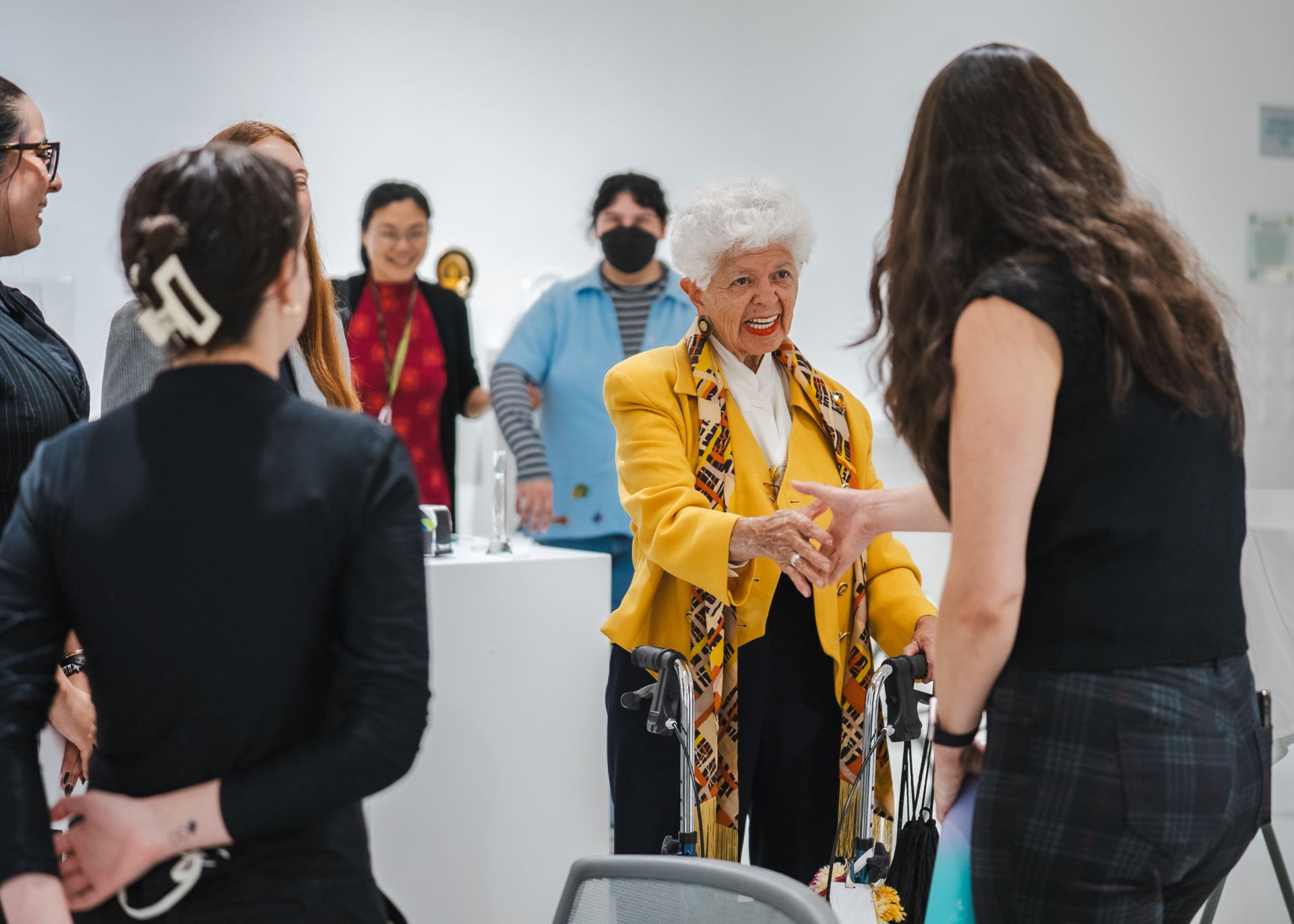
Championing Education, Archives, and Mental Health
Grace F. Napolitano’s connection to the University of La Verne runs deep, shaped by decades of public service in California’s San Gabriel Valley. Born in Brownsville, Texas, and educated at Cerritos College, Napolitano launched her political career locally—first as Norwalk’s mayor, then as a California Assembly member—before representing the region in Congress from January 1999 through […]
January 21, 2026
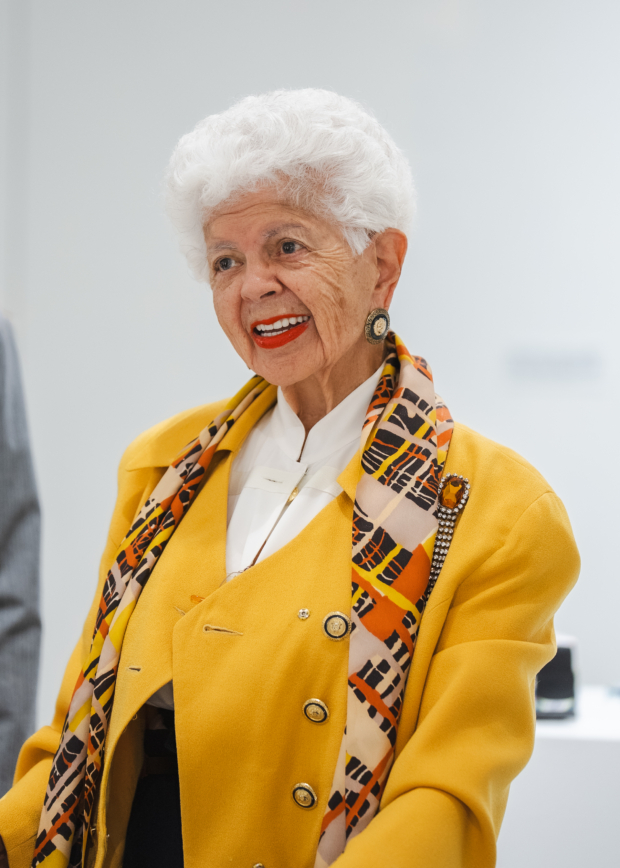
Grace F. Napolitano’s connection to the University of La Verne runs deep, shaped by decades of public service in California’s San Gabriel Valley. Born in Brownsville, Texas, and educated at Cerritos College, Napolitano launched her political career locally—first as Norwalk’s mayor, then as a California Assembly member—before representing the region in Congress from January 1999 through early 2025.
ULV recognized her early on and most notably in 2019, when she was awarded an honorary Doctorate in Humane Letters for her advocacy in immigration reform, veterans’ services, small business development, and especially mental-health initiatives. She also delivered the commencement address that same year, urging graduates to embrace leadership and service.
From that moment, her engagement with ULV intensified. Her leadership and vision dovetailed with the university’s goals of bolstering public service, equity, and wellness—making ULV a natural home for her forthcoming archival and mental-health initiatives.
Napolitano shared that she chose ULV for her archive because of its student-centered mission. President Risa Dickson commented:
“This is an incredible moment for the institution in so many ways… These archives will serve to educate and inspire University of La Verne’s students, researchers, and future public servants.”
Impact on Students and Campus Life
Her decision underscores her commitment to local higher education and the community beyond legislative service. Napolitano’s archive decision wasn’t merely symbolic—it was deeply intentional. By keeping her archives within the district, Napolitano ensures local scholars and students can explore grassroots governance—especially impactful in a region historically underrepresented in major archives. ULV students gain firsthand exposure to the inner workings of legislative advocacy, campaign strategy, and constituent relations—an experiential supplement to traditional coursework. As someone who often speaks about hope and opportunity, Napolitano chose ULV to encourage students to explore civic involvement and leadership—showing them a living blueprint rather than a distant historical figure.
The archive donation has already generated positive ripple effects across ULV’s academic life. Political science and history courses can now leverage primary materials—urban development proposals, draft legislation, and campaign strategies—for hands-on research projects.
This curation positions ULV as a hub for regional civic studies. Beyond research, the archives are inspiring. The wrestling belt—from her mental health advocacy—provides a visceral emblem of resilience and public passion, particularly resonating with students in psychology, public health, and social sciences.
The exhibitions enable broader campus engagement, encouraging visitors to connect with community-focused governance across her 26-year congressional tenure. Perhaps Napolitano’s most direct connection to ULV is her critical role in securing Department of Education funding to establish the Institute of Mental Health and Psychological WellBeing. In June 2023, ULV was awarded a $2.2 million U.S. Department of Education grant—partially in response to Napolitano’s advocacy through Community Project Funding—laying the groundwork for the Institute within the new College of Health and Community Well-Being (CHCWB). This college incorporates mental-health awareness throughout curricula. The archives—and the wrestling belt’s symbolism—offer unique educational storylines for students, illustrating how advocacy transforms into formal policy and campus programs. As founder and co-chair of the Congressional Mental Health Caucus, Napolitano prioritized mental-health equity. In 2001, she launched culturally competent school-based programs after alarming data showed one in three Latina adolescents had considered suicide.
She co-sponsored the Mental Health Services for Students Act (H.R. 3713), aimed at expanding on-site school mental-health professionals. Her leadership also helped secure mental-health parity in the Affordable Care Act and established veterans’ and adolescent services.
Why This Matters: From Dollars to Lives
ULV’s move to weave mental-health pedagogy into all disciplines reflects a larger cultural shift—students and faculty are now united in promoting wellness. The Institute supports subsidized on-campus services via Counseling and Psychological Services (CAPS), helping combat anxiety and depression—especially post pandemic.
The Institute extends far beyond ULV: training covers four school districts in the region, aiming to dismantle disparities in mental health access for ethnically diverse and underserved youth.
A focus on simulation labs, experiential learning, and evidence-based curriculum ensures students gain hands-on readiness. Future mental-health practitioners trained here are positioned to serve as practitioners, educators, or policymakers addressing critical local and national needs.
The archival gift and the Institute are deeply linked: both reflect Napolitano’s belief that access to knowledge—whether historical or mental health—triggers empowerment.
The archive tells a story: one woman’s journey from local mayor to mental-health champion in Congress. The wrestling belt symbolizes a fight—public and personal—for awareness. The Institute, empowered by state and federal dollars she procured, operationalizes this legacy—creating infrastructure that empowers students to carry forward her mission.
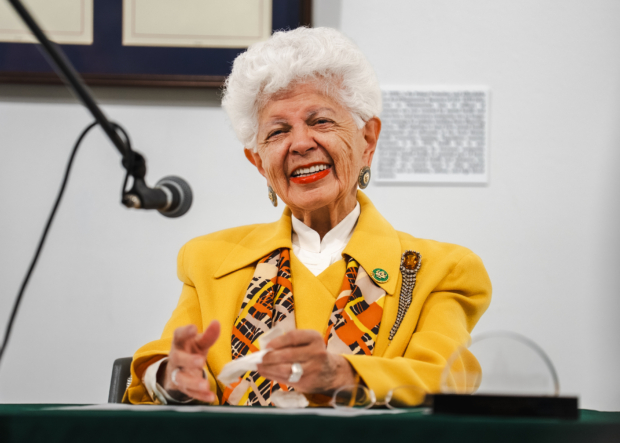
The Institute continues to expand:
- Curriculum Integration: Faculty training in neurodiversity and cultural competence will spur campus-wide pedagogy.
- Research & Grants: Future federal and philanthropic funding may follow initial success.
- Community Partnerships: Expansion through school district seminars and local clinics embeds the Institute within the region.
- Student-Led Innovation: Students now have direct access to real-world legislative history, inspiring civic engagement and mental-health leadership.
Grace Napolitano’s partnership with ULV transcends honorary degrees—it has been a been a dynamic collaboration. By entrusting her archives to Wilson Library, she embedded a living history of public service in her very own community. By securing funding for the Institute of Mental Health and Psychological Well Being, she helped create a structured mechanism to tackle stigma, train professionals, and enhance campus and community wellness.
For ULV students, this legacy provides tangible lessons: a career built on advocacy; a symbolic “wrestling belt” that invites conversation; a campus invigorated to embed mental health consciousness into every discipline. Napolitano’s holistic impact aligns with ULV’s core values of ethical reasoning, diversity and inclusivity, lifelong learning, and civic and community engagement.
Through archives and institutions alike, she has built pathways—from history, to healing, to hope—for current and future generations of Leopards to follow.